
Loading
Preparing your coverage insights...
Our Locations
Loading
Preparing your coverage insights...
A 2026 guide to tow truck insurance: cost by coverage type, on-hook towing coverage vs garagekeepers legal liability, what standard commercial auto does not cover, motor club requirements, and how to build the full coverage package. Dragon compares Progressive Commercial across PA, TX, VA, MD, OH, TN, and KY.
Get a tow truck insurance quote. One call compares the carriers we write side by side.
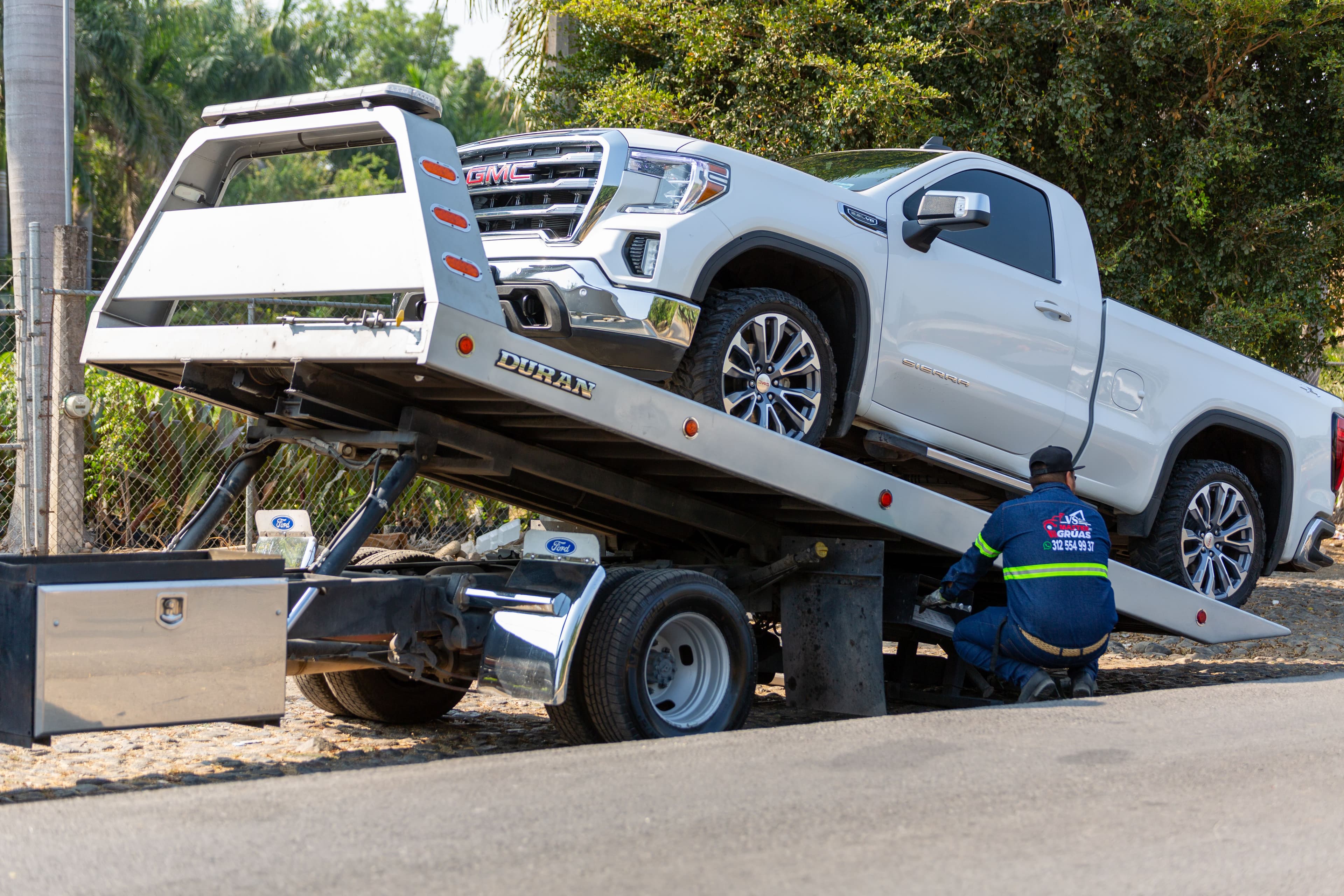
Tow truck insurance is the package of commercial auto liability, physical damage on the truck, and on-hook or garagekeepers coverage that a wrecker, rollback, or flatbed towing operation needs to run legally and get dispatched by motor clubs. Standard commercial auto covers your truck; it does not cover the customer vehicle you are pulling. That second exposure is why towing is a specialty risk most standard carriers will not write.
As an independent agency appointed with Progressive Commercial, Dragon Insurance quotes tow truck insurance for owner-operators and towing companies in Pennsylvania, Texas, Virginia, Maryland, Ohio, Tennessee, and Kentucky. Below: the coverage parts you need, what moves your monthly premium, and how On-Hook Towing coverage (the PA/OH term) compares with Garagekeepers Legal Liability (the TX/VA term for the same risk).
Where We Write Policies
Licensed in PA, TX, VA, MD, OH, TN & KY only. Quotes available for these states.
Key Takeaways
Quick Answer
How much does tow truck insurance cost per month?
Premiums can start around $200 a month for a clean-record truck with established authority, but the range runs into the thousands depending on your equipment, cargo, radius, authority age, and driving history. On a tow truck, the monthly premium also moves with the on-hook or garagekeepers limits your motor club contracts require and with the truck type (wheel-lift, flatbed, rotator, heavy wrecker). For published industry averages across other truck types and states, see the benchmark table in our commercial truck insurance cost guide. Call 717-229-5115 for a monthly rate specific to your operation.
People search for towing company insurance and tow truck insurance interchangeably, but they describe two different scopes, and the difference decides how much coverage you actually need to buy.
Insuring a single tow truck
One truck, usually one driver, often an owner-operator running motor club calls or private property work. The program is commercial auto liability, physical damage on the truck, and on-hook coverage for the vehicle being towed. This is the simplest version of the risk.
Insuring a towing company
A business with multiple trucks, hired drivers, and usually a storage or impound yard. Everything above still applies per truck, and then the business exposures stack on top: garagekeepers for vehicles in your care, general liability for the premises, and workers compensation once you have employees. Most uninsured gaps we see are in this second layer, not the trucks.
If you operate as a company rather than a single truck, read the yard, general liability, and workers compensation sections further down. Those three are what separate a towing company insurance program from a tow truck policy, and they are the coverages most often missing when a new client brings us their existing paperwork to review.
A full tow truck insurance program is built from several distinct coverage parts. Most carriers write these as a commercial auto package plus separate endorsements or standalone policies for the on-hook and garage exposures.
Primary Auto Liability
Covers bodily injury and property damage you cause to other people while operating the tow truck. This is federally required for interstate for-hire operations, where the FMCSA minimum for trucks of 10,001 pounds or more is $750,000, and motor club contracts commonly ask for $1,000,000.
Physical Damage (Truck)
Collision covers your tow truck in a crash; comprehensive covers theft, fire, vandalism, and weather damage to the truck itself. Required by lenders on financed equipment.
On-Hook Towing Coverage
Covers damage to a customer's vehicle while it is attached to your tow truck and in transit. This is the core specialty coverage that standard commercial auto does not include. Called Garagekeepers Legal Liability in Texas and Virginia.
Garagekeepers Legal Liability
The TX/VA term for the same risk as On-Hook: covers vehicles in your care, custody, and control, including on the hook, on the lot, or stored at your facility pending pickup.
General Liability
Covers bodily injury and property damage claims that arise away from the vehicle, such as a customer tripping at your lot or property damage during a repo or recovery operation not covered by auto liability.
Garage Liability
A broader form of GL designed for automotive businesses, covering operations like a repair shop, impound lot, or storage facility in addition to the towing operation itself.
A tow truck monthly premium is the sum of four pieces, and the two tow-specific pieces, on-hook and garagekeepers, are what separate it from any other commercial truck quote. Here is how the pieces generally compare relative to each other: primary auto liability is typically the single largest piece, physical damage on the truck itself is priced on replacement value, on-hook/garagekeepers coverage scales with the limits your motor club or contracts require, and general liability is usually the smallest piece of the four. Costs increase significantly for heavy rotators, large fleets, high-limit on-hook requirements from motor club contracts, or poor loss history.
For published industry averages across other truck types, see the benchmark table in our commercial truck insurance cost guide. For a real monthly number on your truck, yard, and motor club contracts, call 717-229-5115 or start your commercial truck insurance quote online.
This is the most common source of confusion for towing company owners shopping across states. The two terms describe the same core coverage exposure but are named differently depending on the state and the carrier.
On-Hook Towing Coverage
Used in: PA, OH, MD, TN, KY
Covers damage to a customer's vehicle while it is physically attached to (on the hook of) your tow truck and being transported. The coverage applies during transit only, not while the vehicle is stored at a lot or facility. A separate storage facility or garage liability policy covers the vehicle once it is off the hook.
Garagekeepers Legal Liability
Used in: TX, VA (common term)
A broader form that covers vehicles in your care, custody, and control whether they are on the hook, stored on your lot, or kept at your impound or storage facility pending release to the owner. This form is typically required by Texas and Virginia motor clubs and is the standard product name used by Progressive Commercial in those states.
The practical lesson: if you operate in multiple states, make sure the policy you are buying covers the full scope of your on-hook and storage exposure, not just the transit leg. Dragon Insurance confirms the correct coverage form for your state and operation when quoting.
An on-hook or garagekeepers claim is paid by your policy, not the customer's auto policy, so how you document each tow decides how fast a damaged vehicle gets repaired and how the loss reads at your renewal.
One intake. Tow truck specialists compared.
Get your tow truck insurance quote from Dragon Insurance.
We build the full package: primary liability, physical damage, on-hook/garagekeepers, and general liability. Tell us your truck, your operation, and your state once.
If you work with motor clubs (AAA, GEICO, Progressive, and other major clubs), be aware that each has minimum insurance requirements you must meet before being dispatched. Typical minimums include:
Dragon Insurance issues COIs and can add additional insured endorsements to your policy for motor club contract requirements. Call us before signing a new motor club agreement so we can confirm your current limits meet the contract requirements.
In Texas, the Texas Department of Licensing and Regulation (TDLR) licenses towing companies and permits tow trucks. Under Texas Occupations Code chapter 2308, you need a TDLR license to operate a towing company or perform towing operations, and every tow truck needs its own permit to tow on public roads. Each permit type sets its own insurance minimum, per truck, per incident:
| TDLR permit | Tows it allows | Liability | Cargo or cargo on hook |
|---|---|---|---|
| Incident management | Police-initiated and accident scene tows, plus private property and consent | $500,000 | $50,000 |
| Private property | Nonconsent tows authorized by a parking facility owner, plus consent | $300,000 | $50,000 |
| Consent | Tows authorized by the vehicle owner only | $300,000 | Not required |
Everything above covers a single truck and driver. A towing company running two or more trucks, a storage or impound yard, and drivers who are not the owner carries a wider set of exposures at the same time: fleet auto coverage, garagekeepers legal liability sized to the yard, general liability for the premises, and workers' compensation once there is payroll. Each of those is a separate insurable risk, and a single-truck on-hook policy will not automatically extend to cover them.
Once a towing business owns two or more trucks, it typically qualifies for one of two structures: a scheduled commercial auto policy, where each truck is listed and rated individually, or a fleet program that bundles every vehicle under one policy. A bundled fleet program is usually simpler to administer, since renewals, endorsements, and certificates of insurance are handled in one place instead of truck by truck. It is not automatically the cheaper option: a single high-risk truck, an inexperienced driver, or a recent loss can affect pricing for the entire fleet account, so a clean scheduled setup sometimes prices better than a bundled fleet program for an operation with mixed truck types or mixed driver experience.
Per-truck pricing generally improves as a fleet grows, since standardized procedures and spread risk work in the fleet's favor at renewal, but a single high-risk truck or driver can offset that benefit for the whole account. A small towing company running two to five trucks with a storage yard should expect total coverage costs across fleet auto, garagekeepers legal liability, and general liability to run well beyond a single-truck operation's cost. Workers' compensation is a separate cost once the company has employees beyond the owner. Call 717-229-5115 for a real number on your specific fleet.
On-hook coverage, discussed above, only protects a vehicle while it is physically attached to the truck and in transit. Once a vehicle comes off the hook and sits at a storage lot, impound yard, or facility awaiting pickup, that is a separate exposure. For a towing company that stores vehicles overnight or holds impounded cars for days at a time, this is not optional coverage; a yard full of vehicles is exposed to fire, theft, vandalism, and weather damage all at once.
Garagekeepers legal liability for a storage or impound yard varies with the yard's physical security: fencing, lighting, cameras, and controlled key access all factor into the rate, and a well-secured lot can qualify for meaningfully better terms than an open, unmonitored one. Standard deductibles and per-vehicle limits vary by market and state, so a company with a higher-value mix of vehicles passing through its yard should carry higher per-vehicle limits than one that mostly handles older, lower-value cars. Call for a rate specific to your yard.
General liability covers bodily injury and property damage claims that happen away from a truck itself, such as a customer slipping on the lot while picking up a vehicle, a delivery driver getting hurt at the facility, or a neighboring property being damaged during a recovery job. It is a distinct policy from commercial auto, which only covers incidents involving a vehicle the company owns or operates.
General liability is generally one of the more affordable pieces of a towing company's program, often written with a $1 million per-occurrence and $2 million aggregate limit. A company that operates a storage or impound yard with regular public foot traffic, an office where customers pay release fees, or a fenced lot near a busy roadway typically needs higher limits than a roadside-only operator with no fixed location for the public to visit.
Not every tow is the same from an underwriting standpoint. A roadside assistance call is dispatched by a driver who wants help. Impound towing, ordered by police or a property manager, and repossession towing, ordered by a lender, both involve recovering a vehicle from an owner who did not request the tow and who may not want it to happen. That difference matters for insurance because it changes the likelihood and type of claim.
Repossession work in particular carries confrontation exposure that standard roadside towing does not. Vehicle owners facing a repo can respond unpredictably, and a recovery that goes wrong can lead to property damage, a personal injury claim, or a wrongful repossession lawsuit if the vehicle was taken in error or the recovery crossed a legal line, such as entering a locked garage or gated property without authorization. Specialty programs for repossession work often build in coverage for assault and battery claims, wrongful repossession liability, and the personal liability of employees involved in a contested recovery, on top of the auto and garagekeepers coverage a roadside towing operation already carries.
A single owner driving their own truck typically has no workers' compensation obligation. That changes the moment a towing company puts a driver who is not the owner on payroll. The employee threshold that triggers the requirement varies by state:
Workers' compensation cost for a tow truck or trucking business depends heavily on payroll size, driver job classification, and claims history, so a single average figure is not a reliable guide. Misclassifying drivers as independent contractors to avoid workers' compensation is a common and costly mistake; state labor departments and workers' compensation auditors routinely reclassify drivers based on how much control the company exercises over their schedule, equipment, and dispatch, not the label in a contract.
How much does tow truck insurance cost?
Premiums can start around $200 a month for a clean-record truck with established authority, but the range runs into the thousands depending on your equipment, cargo, radius, authority age, and driving history. A tow package combines primary liability, physical damage, on-hook/garagekeepers, and general liability. Heavy rotators, high-limit motor club contracts, and poor loss history push premiums well above the entry-level range. Call 717-229-5115 for your actual rate.
What is on-hook towing insurance?
On-Hook Towing coverage pays for damage to a customer's vehicle while it is attached to your tow truck and being transported. Standard commercial auto covers YOUR truck, not what you are towing. Without on-hook coverage, you are personally responsible for damaging a customer's $40,000 car in transit. In Texas and Virginia, the same protection is called Garagekeepers Legal Liability, which is typically broader and covers vehicles stored at your lot as well.
What is garagekeepers legal liability?
Garagekeepers Legal Liability covers vehicles in your care, custody, and control, including vehicles on your hook, stored on your lot, or kept at your impound facility. It is the Texas and Virginia term for what Pennsylvania and Ohio call On-Hook Towing coverage. Progressive Commercial offers this product across all states and typically builds it into a tow truck policy package alongside primary liability and physical damage. If you run a licensed vehicle storage facility in Texas, TDLR rules (16 TAC 85.400) require insurance on the vehicles you store, and motor club contracts in any state typically require garagekeepers coverage too.
Do you need insurance for a towing company?
Yes. Commercial auto liability is required to legally operate a commercial vehicle in every state. In addition, motor clubs and private contract partners require proof of on-hook or garagekeepers coverage before dispatching you. State impound and storage lot licenses in Pennsylvania, Texas, Virginia, and other states require a minimum level of insurance as a licensing condition. Operating a tow truck uninsured or underinsured exposes the business owner to personal liability for vehicle damage claims that can easily exceed the value of the tow truck itself.
Do tow trucks in Texas need special insurance?
Yes. Texas requires a TDLR towing company license and a separate TDLR permit for each tow truck, and each permit type carries its own insurance minimum per truck, per incident. Incident management trucks need $500,000 in liability and $50,000 in cargo or cargo on hook coverage. Private property trucks need $300,000 in liability and $50,000 in cargo or cargo on hook. Consent-only trucks need $300,000 in liability, with no cargo minimum. The policy must come from an insurer licensed in Texas and stay in force at all times. Dragon Insurance quotes Texas tow truck packages that meet your permit class and your motor club contracts. Call 717-229-5115.
What carriers write tow truck insurance?
Tow truck insurance is a specialty niche; most standard commercial auto carriers will not write it. Progressive Commercial is one of the most active tow truck carriers in the United States and writes primary liability, physical damage, and on-hook/ garagekeepers across all states Dragon serves: PA, TX, VA, MD, OH, TN, and KY. Dragon Insurance is appointed with Progressive Commercial and quotes tow truck packages directly, including motor club COI requirements and additional insured endorsements.
How much is tow truck insurance per month?
Tow truck insurance premiums can start around $200 a month for a clean-record truck with established authority, but the range runs into the thousands depending on your equipment, cargo, radius, authority age, and driving history. On a tow truck, your on-hook limits and motor club contract requirements move the monthly number further. Monthly billing is available through premium finance companies, which split the annual premium into installments in exchange for a small finance fee. Paying annually in full is cheaper overall. Dragon can quote both payment options across PA, TX, VA, MD, OH, TN, and KY. Call 717-229-5115 for your monthly rate.
What is motor club insurance for tow trucks?
Motor club insurance is not a separate policy type, but the term refers to the coverage requirements that motor clubs such as AAA, GEICO Motor Club, and other major dispatch networks mandate before dispatching a tow operator. Most clubs require at minimum $1,000,000 combined single limit auto liability, on-hook or garagekeepers legal liability with per-vehicle limits matching the types of vehicles you will tow, and general liability of $1,000,000 per occurrence. A Certificate of Insurance naming the motor club as an additional insured is typically required before the first dispatch. Dragon Insurance builds tow truck packages that meet motor club requirements and issues COIs directly for operators in PA, TX, VA, MD, OH, TN, and KY.
Do towing companies need different insurance than a single tow truck operator?
Yes. A towing company with two or more trucks needs a fleet-level commercial auto policy, garagekeepers legal liability sized to its storage yard capacity, general liability for the yard itself, and workers' compensation once it has employees beyond the owner. A single owner-operator's on-hook coverage protects one truck and one driver; a company-level policy has to account for multiple drivers, a physical storage location, and payroll exposure the single-operator model does not have.
Does impound and repossession towing cost more to insure than roadside towing?
Generally yes. Impound and repossession towing carry a different risk profile than roadside assistance calls because repo drivers recover vehicles from owners who did not request the tow, which can lead to confrontations, property damage claims, and wrongful repossession lawsuits. Carriers often apply higher minimum liability limits to repo operations, and if you add impound or repo work to an existing roadside towing policy without telling your carrier, the change in classification can trigger a mid-term audit or even complicate coverage on a claim.
When does a towing company need workers' compensation insurance?
The threshold depends on the state. Pennsylvania, Maryland, Ohio, and Kentucky require workers' compensation once a business has one employee; Virginia requires it at two employees; Tennessee requires it at five employees for most businesses. Texas is the only state in the country where workers' compensation is optional for private employers, though a towing company that opts out (a "nonsubscriber") loses key legal defenses if a driver is hurt on the job. Ohio is a monopolistic state, so Ohio towing companies must buy workers' compensation directly from the Ohio Bureau of Workers' Compensation; Dragon Insurance cannot place that coverage in Ohio.
How much does insurance cost for a small towing company with 2 to 5 trucks?
Costs scale with fleet size, coverage limits, and whether the company runs a storage yard, combining commercial auto, garagekeepers, and general liability. Per-truck pricing tends to improve as a fleet grows, since standardized procedures and spread risk work in the fleet's favor at renewal, though a single high-risk truck or driver can offset that benefit for the whole account. Call for a real number on your specific fleet.
Do I need a separate insurance policy for each truck in my fleet?
Not necessarily. Most towing companies with two or more trucks qualify for either a scheduled commercial auto policy, where each truck is listed individually, or a fleet program that bundles all vehicles under one policy. A bundled fleet program is usually easier to administer, but it is not automatically cheaper: one high-risk truck or driver can affect pricing for the entire fleet account, so a clean scheduled setup sometimes prices better than a bundled fleet program for a mixed-risk operation.
Which tow truck insurance carriers write coverage for towing companies with fleets and impound yards?
Dragon Insurance is appointed with Progressive Commercial, which writes primary liability, physical damage, and on-hook/garagekeepers coverage for towing fleets across Pennsylvania, Texas, Virginia, Maryland, Ohio, Tennessee, and Kentucky. For general liability, workers' compensation, and business owner's coverage, Dragon shops the company's needs across its broader business insurance markets and quotes the right fit for the account.
Tow truck insurance is not a one-size package. The limits you need depend on your truck, your motor club contracts, your state, and whether you run a storage lot. Dragon Insurance builds the complete coverage program and quotes Progressive Commercial across PA, TX, VA, MD, OH, TN, and KY in one conversation. If your operation also hauls freight beyond towing, see our commercial trucking insurance page for fleet and owner-operator coverage.
Visit us: 1525 Cedar Cliff Dr STE 202, Camp Hill, PA 17011
Serving PA, TX, VA, MD, OH, TN, and KY. English, Nepali, and Hindi spoken.
Dragon Insurance Services LLC is a licensed independent insurance agency. This article reflects general market factors and our agency's quoting experience across PA, TX, VA, MD, OH, TN, and KY; it is not a price quote or a guaranteed rate. Towing insurance requirements vary by state, motor club contract, and operation type; verify current requirements before entering into contracts. Actual premiums vary by truck, driver, coverage, and state, and are subject to underwriting approval. Contact us for a personalized quote.
Explore Related Coverage
Ready to compare carriers and get a quote?
Dragon Insurance is an independent agency in Camp Hill, PA. We shop 30+ carriers to find your best rate.
Prefer to talk it through?
Get a real quote from a licensed advisor. English, Nepali, and Hindi spoken.
About the Author
Bimal GurungCEO, Agency Principal & Licensed Insurance Agent
Bimal Gurung is CEO and Agency Principal of Dragon Insurance Services, an independent agency in Camp Hill, PA that compares 30+ carriers for clients across Pennsylvania, Texas, Virginia, Maryland, Ohio, Tennessee, and Kentucky.
Meet the Dragon Insurance teamContinue Reading

Business
Commercial Truck Insurance Cost: What Drives It
12 min read
Business
Texas Commercial Trucking Insurance
13 min read
Business
Moving Company Insurance: What Movers Need 2026
10 min read
Business
Hot Shot Trucking Insurance: Pickup & Gooseneck Coverage
11 min read
Business
Commercial Trucking Insurance in Pennsylvania
18 min read