Loading
Preparing your coverage insights...
Our Locations
Loading
Preparing your coverage insights...
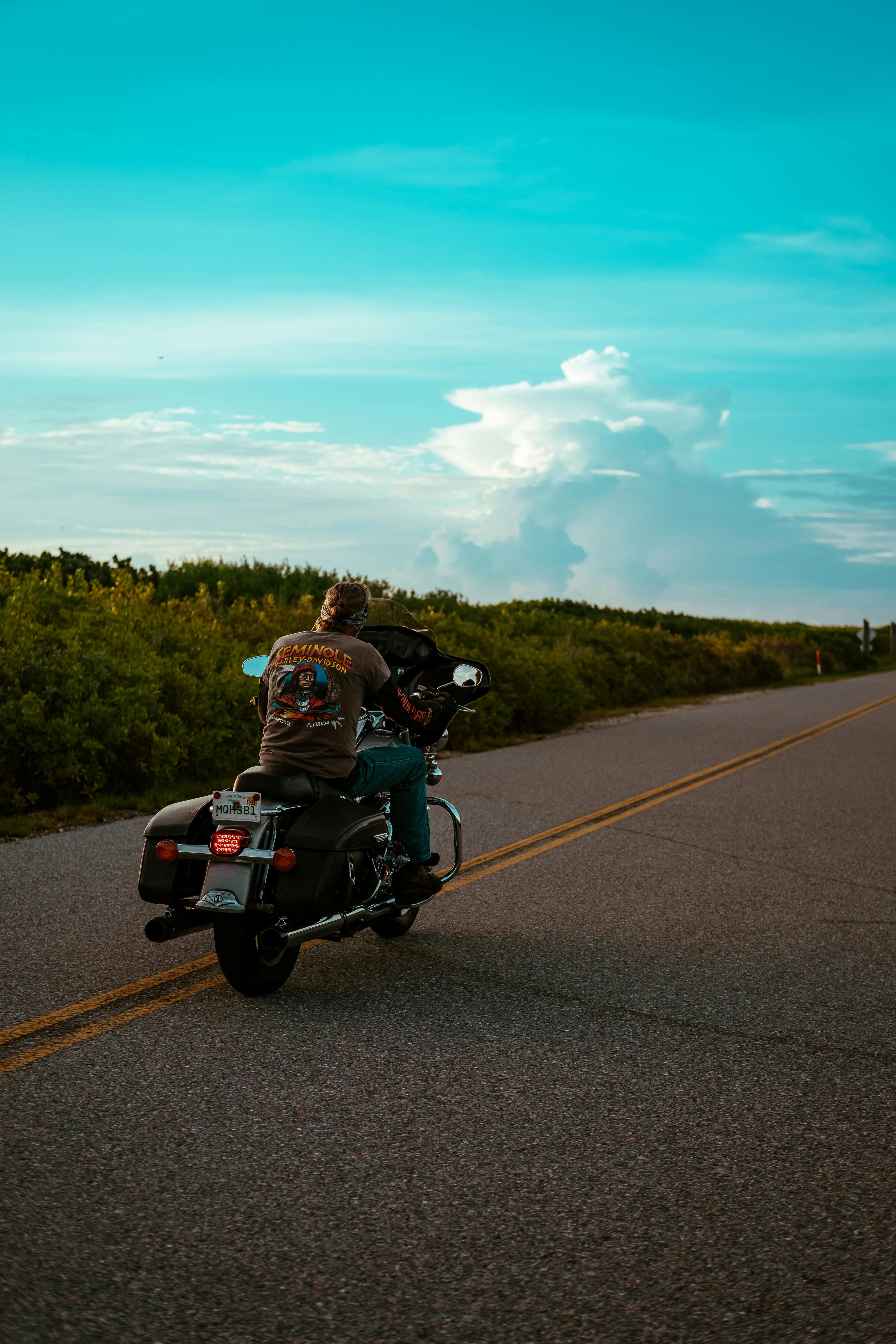
Compare 30+ carriers for motorcycle insurance in Pennsylvania and six other states. Liability, custom parts, SR-22, and full coverage for every riding profile.
Licensed in PA, TX, VA, MD, OH, TN & KY only. Quotes available for these states.
Quick Answer
Coverage for injuries or damage you cause.
Repairs to your bike after a crash, regardless of who is at fault.
Theft, fire, and weather-related losses.
Helps with medical bills after an accident, regardless of fault.
Pays your medical bills and bike repairs when an at-fault driver has no insurance or not enough.
Protection for upgrades and accessories.
Pays medical expenses for a passenger on your bike if you are found at fault in an accident.
Towing and emergency help on the road, plus limited coverage for a trailer on some policies.
An agreed value endorsement locks in a set payout instead of a depreciated actual cash value.
Why You Need It
Protect your bike and your financial responsibility. Motorcycle insurance helps cover damages, theft, and liability if you're involved in an accident, so you can ride with confidence.
Weekend riders with standard bikes.
Daily riders with custom parts.
High-value bikes and frequent riders.
Lachu Sharma
“Great price. I saved $1,100 a year by switching with them. Best insurance agency in York, PA. Thank you team Dragon.”
What you will need:
Bike type
Sport bikes cost more to insure than cruisers, touring bikes, or scooters.
Riding experience
Years of experience impact rates.
Location
Urban areas have higher claim rates.
Usage
Daily commuting vs seasonal riding.
Safety course completion
An MSF Basic RiderCourse or equivalent can cut your premium by roughly 5 to 15 percent.
Carrier selection
The same rider and bike can vary by $300 to $500 a year depending on which carrier quotes it, which is why comparing 30+ carriers matters.
Pennsylvania is consistently one of the cheaper states we quote for motorcycle coverage. According to MoneyGeek's 2026 analysis, motorcycle insurance nationally averages about $12 per month for liability-only and about $30 per month for full coverage, and Pennsylvania riders typically fall at or below those figures on a clean record. Your actual PA motorcycle insurance cost depends on your bike type, engine size, age, riding history, storage location, and whether you carry collision and custom parts coverage. For the full state-by-state cost breakdown and the factors that move the number most, see our motorcycle insurance cost guide, or call 717-229-5115 for a real quote on your bike.
Liability pays for injuries and property damage you cause to other people; it never pays for your own bike. Collision pays to repair or replace your motorcycle after a crash, regardless of fault, including single-bike drops, low-sides, and parking-lot tip-overs. Comprehensive pays for non-crash losses like theft, fire, vandalism, and weather damage. Most full-coverage policies combine all three.
Yes, through guest passenger liability, which pays medical expenses for a passenger on your bike if you are found at fault in an accident. It is not automatically included on every base policy, so confirm it is listed on your declarations page if you regularly ride two-up. Adding medical payments (MedPay) alongside guest passenger liability covers a passenger's injuries regardless of who caused the crash.
Yes, through custom parts and equipment (CPE) coverage. Standard comprehensive and collision coverage protects your bike up to its factory value, so aftermarket exhaust, custom paint, chrome, saddlebags, and sound systems are typically not included beyond a modest built-in allowance. Progressive offers CPE coverage up to $30,000, and Foremost and National General are strong options for Harleys and custom builds with significant aftermarket investment. If you have invested a meaningful amount in modifications, ask your agent to confirm your CPE limit actually matches what you have spent.
Only if you carry comprehensive coverage. Liability and collision do not pay for theft. Comprehensive reimburses you up to your bike's actual cash value, or agreed value if you have that endorsement, if it is stolen. According to FBI motor vehicle theft data, roughly 54,000 to 56,000 motorcycles are stolen in the U.S. each year, so comprehensive is worth carrying on any bike stored outside or in an unsecured space.
Yes, more than for most drivers. Motorcyclists have far less physical protection in a crash, so when the at-fault driver has no insurance or too little, uninsured/underinsured motorist (UM/UIM) coverage is often the only way to recover medical costs and bike repairs. According to the Insurance Institute for Highway Safety, motorcyclists are about 24 times more likely to die per vehicle mile traveled than car occupants, which makes UM/UIM one of the highest-value coverages a rider can add, especially in Pennsylvania, where motorcyclists automatically keep full tort rights but must rely on their own policy, not a lawsuit, to pay first.
Most standard comprehensive and collision claims pay actual cash value (ACV): your bike's depreciated market value at the time of loss, not what you paid for it. Some carriers, including National General, offer an agreed value endorsement that locks in a set payout amount instead, worth considering for a customized, vintage, or recently purchased bike so depreciation does not leave you underpaid.
Health insurance typically covers your medical bills after a motorcycle accident, but usually after deductibles and copays, and it can seek reimbursement from any liability settlement you receive. MedPay on your motorcycle policy pays first, with no deductible in most cases, which is why many riders carry both. This matters most in Pennsylvania, where motorcycles are excluded from the state's mandatory PIP requirement that applies to car insurance.
No. Your car insurance policy does not extend to a motorcycle you own; any motorcycle titled in your name needs its own separate policy. You may have limited coverage if you occasionally ride a friend's bike with permission, but check with your carrier, since permissive-use coverage is not automatic on every policy.
Personal property coverage on a renters or homeowners policy can sometimes cover a helmet, jacket, or riding gear stored at home, subject to your policy's standard limits and deductible. It does not cover the motorcycle itself or gear while you are riding. If you own significant riding gear, ask your agent whether a scheduled personal property endorsement makes sense.
No, and this is the most important coverage gap riders need to understand. Liability insurance only covers damage and injuries you cause to others. If you drop your bike in a parking lot, low-side in a corner, or tip it over at a stop, liability pays nothing for your own repairs. To cover your own bike in a single-bike crash, you need collision coverage. Lenders require it on financed motorcycles; some riders choose to skip it once an older bike's value drops below around $3,000 to $4,000 and self-insure that risk instead.
In Pennsylvania and other states with continuous coverage requirements, canceling your policy while your bike is still registered violates state law and can trigger a registration suspension, even if the bike is just in winter storage. If you cancel anyway, your carrier notifies the state, which can suspend your registration and create a coverage-lapse rating penalty on your next policy. The standard approach for seasonal riders is to reduce coverage, not cancel it: many carriers let you suspend collision during storage months while keeping comprehensive active, so your bike stays protected against theft, fire, and weather while you save on the collision portion. If you truly will not need the bike, the alternative is to surrender your registration and plates before canceling, then re-register when riding season returns. Talk to Dragon Insurance before making any changes to your policy so you do not create an unintended gap.
Roadside assistance can be added to cover towing, fuel delivery, flat-tire service, and on-road breakdowns, an add-on many riders skip until they need it on a remote highway. It is not automatically part of every base policy. Some policies also extend limited coverage to a trailer used to haul the bike, so confirm this separately if you tow to rallies or track days.
Turnaround varies by bike details, riding history, and carrier requirements. We will confirm timing after review.
SR-22 is a certificate of financial responsibility that your insurer files with the state after certain violations such as a DUI or license suspension, it is not a separate type of insurance. Not all carriers file SR-22s for motorcycle policies. We work with carriers that do and can help you find coverage that meets your state requirements across PA, TX, VA, MD, OH, TN, and KY.
Cost varies significantly by bike type, coverage level, and riding history. As general estimates for a clean-record rider, not a guaranteed quote, liability-only runs about $120 to $280 per year for a standard cruiser, $300 to $600 for a sport bike, $140 to $300 for a dual-sport or adventure bike, $150 to $320 for a touring bike, and $80 to $200 for a scooter or moped. Full coverage typically runs $600 to $1,100 per year for a cruiser, $1,400 to $3,000 for a sport bike, $500 to $1,200 for a dual-sport, $800 to $1,800 for a touring bike, and $300 to $700 for a scooter. Sport bikes cost more due to claim frequency and repair costs. The biggest factor that controls your rate is often your carrier, not your bike type: the same rider profile can vary by $300 to $500 per year depending on which carrier quotes it, which is why comparing 30+ carriers in one call matters.
Yes. A clean riding record is the single biggest factor for lower premiums. Completing an approved safety course can reduce your rate further. We shop multiple carriers to find the most competitive option for your riding profile.
Yes. Most carriers offer a discount, typically in the 5 to 15 percent range, for completing a Motorcycle Safety Foundation (MSF) Basic RiderCourse or an equivalent approved course. In Pennsylvania, riders under 18 are required to complete a safety course to obtain an unrestricted motorcycle license, but the discount itself is available regardless of age. Some carriers require the course to have been completed within the last 3 to 5 years of the policy date.
The best carrier depends on your bike type and rider profile. Progressive is a strong overall option for most PA riders, with broad coverage for custom parts and most bike types including sport bikes. Foremost is a strong choice for cruisers and Harley-Davidson touring bikes. GEICO tends to suit clean-record riders on standard bikes who want liability-only at a low price. Bristol West specializes in non-standard records, including DUI history, multiple violations, or SR-22 requirements. Safeco is a good option for riders who want to bundle motorcycle with auto and home. National General is a strong option for agreed-value policies on high-value or custom bikes. As an independent agency, Dragon Insurance quotes all of these carriers in one call so you can compare actual quotes rather than guessing which fits your profile.
Yes. Pennsylvania requires all motorcycle operators to carry minimum liability insurance: $15,000 per person and $30,000 per accident for bodily injury, and $5,000 for property damage. Riding without insurance in PA risks a $300 fine, registration suspension, and personal liability for the full cost of any accident you cause.
Riding uninsured in PA carries a $300 civil penalty for a first offense, registration suspension until proof of insurance is provided, possible license suspension, and an SR-22 requirement for reinstatement. Beyond the legal penalties, the bigger risk is financial: if you cause an accident that injures another rider or damages vehicles while uninsured, you are personally responsible for every dollar of the resulting claim, and a single serious accident can easily result in a $100,000 to $500,000 liability exposure.
Pennsylvania requires 15/30/5 minimum liability: $15,000 bodily injury per person, $30,000 per accident, and $5,000 property damage. PA also has a continuous coverage requirement, which means a lapse in coverage can result in registration suspension even if you are not actively riding. Most riders carry limits above the state minimum to protect their personal assets.
Pennsylvania car owners choose between limited tort and full tort when they buy auto insurance, but motorcyclists never get this choice, and do not need it. Under Pennsylvania's Motor Vehicle Financial Responsibility Law, the limited/full tort election applies only to private passenger motor vehicles, a category that excludes motorcycles. PA riders automatically retain full tort rights no matter what election they made on their car policy, meaning a PA motorcyclist injured by a negligent driver can pursue compensation for pain and suffering without meeting the tort threshold that applies to car accident claims. The catch is that it is the at-fault driver's insurance, not yours, that pays those damages, and many drivers carry only the state minimum or nothing at all, which is exactly why adequate UM/UIM coverage matters so much for riders.
Yes. Pennsylvania has a continuous coverage requirement. You must maintain active motorcycle insurance as long as your bike is registered, even during winter months when you are not riding. If you cancel your insurance while the bike is still registered, PennDOT is notified by your carrier and can suspend your registration, and you may also face fines when you try to reinstate in the spring. The only way to legally stop paying for the season is to surrender your registration and plates to PennDOT before canceling coverage, then re-register when riding season returns. Most PA riders find it simpler to keep comprehensive-only coverage through winter, dropping collision while the bike is stored, or to maintain the full policy year-round.
Quote Support
Submit your details and an advisor will reach out soon.
Prefer to talk now? Tap to call and we’ll guide you through the next steps.
Contact Us
Tell us a bit about what you need and we will respond as soon as possible.
Local Coverage
Dragon Insurance Services is a licensed independent motorcycle insurance agency serving riders across Pennsylvania and the other states we serve. Our office is at 1525 Cedar Cliff Dr STE 202, Camp Hill, PA 17011. We help PA riders in Harrisburg, Camp Hill, Lemoyne, York, Lancaster, Allentown, and across the state compare motorcycle insurance quotes from the carriers we write, including Progressive, Safeco, Foremost, and Bristol West.
Pennsylvania requires 15/30/5 minimum liability and continuous coverage year-round. Whether you need custom parts protection or the lowest rate for a clean record, we find your best option in one call. See what riders pay by state and bike type in our motorcycle insurance cost guide, or call 717-229-5115 or get a quote online.
Locally based in Camp Hill, PA, serving clients across Pennsylvania, Texas, Virginia, Maryland, Ohio, Tennessee, and Kentucky.
Need to know the PA requirements? Do You Have to Have Motorcycle Insurance in Pennsylvania? 2026 Guide covers PA minimums, continuous coverage rules, and penalties for riding uninsured.
Ride more than one kind of machine? We also cover off-road and winter recreation. See our ATV and UTV insurance guide and our snowmobile insurance cost guide, both written for the states we serve.
Blog
Motorcycle insurance requirements, coverage types, and ways to save across PA, TX, VA, MD, OH, TN, and KY.
June 9, 2026
Do You Have to Have Motorcycle Insurance in Pennsylvania? 2026 Guide
Yes, Pennsylvania requires motorcycle insurance. PA minimums are $15,000/$30,000 bodily injury and $5,000 property damage. Riding uninsured in PA risks a $300 fine, registration suspension, and personal liability for all accident costs.
Read article →
June 6, 2026
How Much Is Motorcycle Insurance? 2026 Cost Guide by State, Bike & Rider
How much is motorcycle insurance? Real 2026 costs by state (PA, TX, VA, MD, OH, TN, KY), bike type, and rider age, plus 8 ways to lower your premium. Get a free quote to see rates for your situation.
Read article →
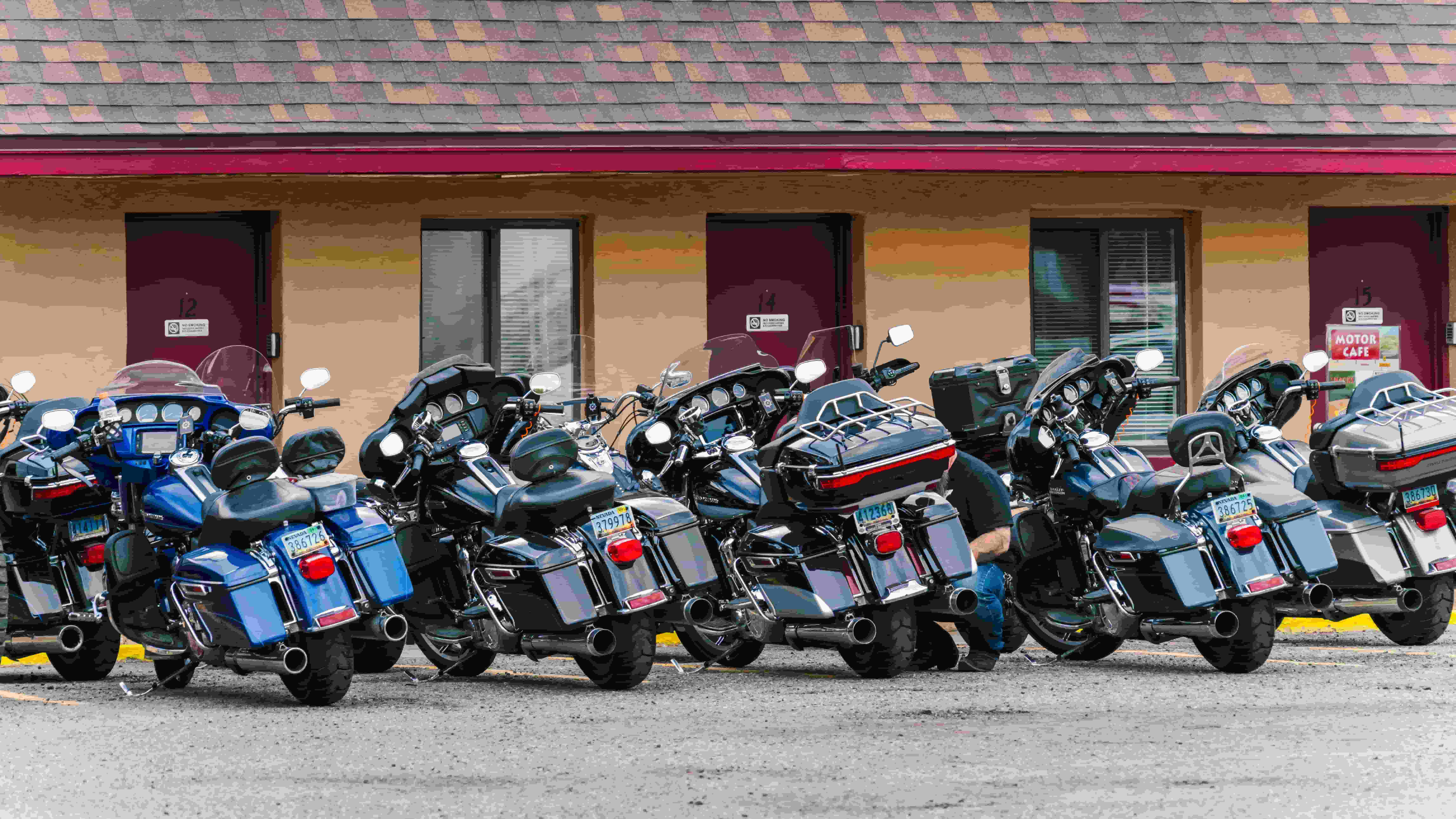
May 30, 2026
Best Motorcycle Insurance of 2026: Top 6 Carriers Compared by an Independent Agent
We compare the 6 best motorcycle insurance carriers of 2026 (Progressive, GEICO, Foremost, Bristol West, National General & Safeco). Real quoting data across PA, TX, VA, MD, OH, TN & KY.
Read article →
August 1, 2026
Foremost Insurance Review 2026: Agent Rated
Foremost is named the top pick across Dragon's RV, boat, and motorcycle guides, but has never had its own review until now. See real AM Best and consumer ratings, honest cost data, the claims process, and who it fits best.
Read article →