
Loading
Preparing your coverage insights...
Our Locations
Loading
Preparing your coverage insights...
Pennsylvania workers comp is required for any employer with 1+ employee. Non-compliance means criminal charges, stop-work orders, and personal liability. This guide covers PA requirements, class codes, the experience mod, and how to cut your premium.
Get a workers compensation quote. One call compares the carriers we write side by side.

In Pennsylvania, operating a business without workers' compensation insurance when you have even one employee is a criminal offense. A first-time violation is a third-degree misdemeanor carrying up to $2,500 in fines and one year in prison, plus a mandatory stop-work order that shuts your doors immediately. The fine for repeat violations escalates to $10,000 per offense. And if an employee gets hurt while you are uninsured, you are personally liable for every dollar of medical costs and lost wages, with no cap and no insurance to absorb the hit.
Key takeaways
Your first employee starts the clock
Pennsylvania requires workers' comp from day one, not after your first hire settles in.
We quote workers' comp so you are covered before that first paycheck goes out, not scrambling to fix it after a Bureau audit or a workplace injury.
Workers' compensation insurance is a state-mandated system that pays medical expenses, lost wages, and disability benefits to employees injured or made ill by their job, regardless of fault. In exchange for these guaranteed benefits, employees give up the right to sue their employer for the injury. This trade-off of certain benefits for limited lawsuits is the foundation of every state's workers' comp system. Key characteristics include:
Dragon Insurance Services helps small and mid-sized businesses across Pennsylvania, Texas, Virginia, Maryland, Ohio, Tennessee, and Kentucky find the right workers' comp coverage. You can compare workers' comp insurance quotes with us now, or read on for a full guide to Pennsylvania requirements, class codes, EMR, and cost control.
A standard workers' compensation policy has two parts, both of which matter:
Part A: Workers' Compensation Benefits
Covers the statutory benefits your injured employees are entitled to under state law. In Pennsylvania, these include:
Part B: Employers' Liability
Protects your business when an employee, or a family member, sues you outside the workers' comp system. This typically happens when an employee claims gross negligence caused their injury, or a spouse files a "loss of consortium" claim. Standard employers' liability limits are $100,000 per accident / $500,000 policy limit / $100,000 per disease. For businesses with significant operational risk, such as construction, trucking, or manufacturing, higher limits are available and often recommended.
Workers' comp is broad, but it has clear limits. Claims in the following categories are routinely denied:
Pennsylvania's Workers' Compensation Act (Act 338 of 1915, as amended) is one of the oldest and most comprehensive workers' comp frameworks in the country. Here is what employers need to know.
Under Pennsylvania law, workers' compensation coverage is mandatory for any employer that employs at least one employee who could be injured or develop a work-related disease in Pennsylvania, including part-time workers, seasonal workers, and minors. There is no small-business exemption. A restaurant owner with one part-time dishwasher is legally required to carry coverage from the employee's first day. If you still work alone, our sole proprietor business insurance guide covers what we quote until that first hire.
Limited exemptions exist for: certain agricultural employees who work fewer than 30 days or earn less than $1,200 from a single employer in a calendar year; employees covered under federal workers' comp acts (railroad workers, longshoremen, federal government employees); and employees who have signed a religious exemption affidavit under specific qualifying criteria. Contracts can demand proof as well: Medicaid transportation brokers ask for workers comp before assigning trips, as our NEMT insurance in Pennsylvania guide explains.
The PA Bureau of Workers' Compensation enforces coverage requirements through audits, employee complaints, and cross-referencing payroll records. If you are found to be operating without required coverage:
Beyond the criminal exposure, an uninsured employer remains personally liable for all medical costs and wage-loss benefits owed to any employee injured during the uninsured period, with no cap and no defense. Source: PA Department of Labor & Industry, Workers' Compensation Compliance.
Pennsylvania employers have four options for meeting their legal obligation:
Pennsylvania's workers' comp system is built on a trade: employers agree to pay defined benefits regardless of fault, and in exchange, employees give up the right to sue their employer in civil court for most work-related injuries. This protection is called the exclusive remedy doctrine, and it is one of the most valuable protections workers' comp provides.
Without workers' comp, an injured employee could file a personal injury lawsuit against you, claim pain and suffering, emotional distress, and punitive damages, amounts with no ceiling. The exclusive remedy doctrine eliminates that exposure for covered employers.
Two exceptions exist: if an employer acts with intent to injure, or if the employer fails to carry required insurance. The second exception is especially important: losing the exclusive remedy protection is an additional penalty for operating without coverage, on top of the criminal charges.
This is one of the most common and costly mistakes small business owners make. Calling a worker a "1099 contractor" does not automatically make them one under Pennsylvania law. If an injured worker is legally reclassified as an employee after the fact, you may owe full workers' comp benefits retroactively, plus civil penalties.
Pennsylvania applies a multi-factor analysis. The central question is behavioral control: does your business control how the worker does their job, or just the result? Key factors include:
For construction workers specifically, Pennsylvania's Construction Workplace Misclassification Act (Act 72 of 2011) imposes additional requirements: a written contract must exist, the worker's business location must be separate from yours, and they must have a prior history of working as an independent contractor.
Pennsylvania's Office of Attorney General actively investigates worker misclassification. If you are found to have misclassified workers, you face civil penalties of up to $1,000 per misclassified worker for initial violations and $2,500 for repeat offenses, back-owed workers' comp premiums, full liability for any injuries the misclassified workers sustained, and potential criminal charges. Source: PA DLI Misclassified Workers.
Your workers' comp premium is not calculated on your payroll alone. It is calculated on your payroll multiplied by a rate that is specific to each type of work your employees do. That rate is determined by a classification code, and the difference between codes can be enormous.
The National Council on Compensation Insurance (NCCI) assigns class codes to every type of work. Pennsylvania uses its own rating bureau (PCRB) for loss costs, but the NCCI class code system is the underlying framework. Each code carries a base rate per $100 of payroll, reflecting the historical injury frequency and severity for that type of work.
| Class Code | Work Type | Why the Rate Is What It Is |
|---|---|---|
| 8810 | Clerical office employees | Desk workers with minimal physical risk: lowest rate category in workers' comp |
| 9082 | Restaurant (full service) | Slip-and-fall risk, hot oil burns, knife injuries: moderate rate |
| 0042 | Landscaping / lawn care | Equipment injuries, repetitive strain, heat exposure: elevated rate |
| 5403 | Carpentry (residential) | Power tool injuries, falls from scaffolding: high rate |
| 7231 | Trucking (long-haul) | MVA risk, loading/unloading injuries: high rate |
| 5551 | Roofing | Fall risk is among the highest in construction, resulting in some of the highest rates in all of workers' comp |
The rate difference is not marginal. A clerical worker (code 8810) might be rated at $0.09 per $100 of payroll, while a roofer (code 5551) can exceed $15.00 per $100 of payroll more than 165 times the cost per dollar of wages. This is why correct classification matters. If your payroll records do not clearly separate job functions, auditors may apply higher codes to your entire workforce, and you will pay for the error. Trade crews with apprentices in the field feel this most, and our HVAC contractor insurance guide shows how that payroll drives the quote.
Dragon Insurance reviews your payroll detail at every renewal to confirm you are classified correctly. Businesses that use a mix of office staff and field workers, or that have reduced higher-risk operations over time, are the most likely to be overpaying. Source: Insureon, Workers' Compensation Class Codes.
Once you have been in business long enough to have three years of claims data, a second major pricing factor kicks in: your Experience Modification Rate (EMR), also called the "mod." This number directly multiplies your base premium, and it can save or cost you thousands of dollars per year.
The EMR compares your actual claims losses over the past three years to the expected losses for businesses of your size and type. The formula is:
EMR = Actual Losses (your 3-year claims) ÷ Expected Losses (industry average for your size and class)
An EMR of 1.0 means your claims history matches your industry average. Below 1.0 earns you a discount. Above 1.0 means you pay a surcharge. NCCI calculates and publishes your EMR annually.
Assume a landscaping business with $200,000 in annual payroll and a base rate of $3.47 per $100 of payroll. Their base premium before the mod is $6,940/year.
| EMR | What It Means | Annual Premium (on $6,940 base) |
|---|---|---|
| 0.75 | Excellent safety record: 25% fewer claims than peers | $5,205/year (saves $1,735) |
| 1.00 | Average: matches industry baseline | $6,940/year |
| 1.30 | Poor record: 30% more claims than peers | $9,022/year (costs $2,082 extra) |
| 0.85 | Good record: 15% fewer claims than peers | $5,899/year (saves $1,041) |
The mod compounds over a three-year window. A serious injury today elevates your premium for up to three years. Conversely, three clean years lowers your mod and reduces costs year after year. The most important thing to understand about the EMR: claim frequency hurts more than claim severity. A single large claim damages your mod less than three smaller claims, because NCCI applies greater weight to the primary (per-claim capped) loss than to excess losses.
A high mod is costing you every renewal
An EMR stuck above 1.0 quietly adds thousands to your premium, year after year.
We pull and audit your experience mod worksheet for errors and shop your policy across carriers, so we quote workers' comp based on your real claims history, not an inflated one.
Pennsylvania workers' comp costs range from under $0.10 to more than $15.00 per $100 of payroll, depending entirely on what your employees do. The table below shows typical rate ranges by industry for Pennsylvania-based businesses using PCRB loss cost data applied by private carriers.
| Industry | Typical Rate (per $100 payroll) | Annual Cost ($200K payroll) |
|---|---|---|
| Clerical / office (8810) | $0.09–$0.50 | $180–$1,000/yr |
| Retail / light commercial | $1.00–$3.00 | $2,000–$6,000/yr |
| Restaurant (full service) | $1.50–$3.50 | $3,000–$7,000/yr |
| Landscaping / lawn care | $2.49–$3.47 | $4,980–$6,940/yr |
| Trucking (long-haul) | $5.00–$7.00 | $10,000–$14,000/yr |
| HVAC / electrical | $3.17–$6.00 | $6,340–$12,000/yr |
| Roofing (residential and commercial) | $10.00–$15.00+ | $20,000–$30,000+/yr |
Rates are market estimates based on PCRB loss costs and carrier Loss Cost Multipliers (LCMs) typical in the Pennsylvania market. Actual premium depends on your specific class codes, experience modification factor, and chosen carrier. Pennsylvania adds a 2.18% Act 57 assessment (2026) to all workers' comp premiums. Source: Pennsylvania Compensation Rating Bureau (PCRB).
Many small business owners, especially first-generation owners, make incorrect assumptions about who needs to be on the workers' comp policy. Here is how Pennsylvania law actually works:
Corporate officers
Corporate officers in Pennsylvania are included in workers' comp coverage by default. A Subchapter C corporation may elect to exclude executive officers with at least 5% ownership. A Subchapter S corporation may exclude officers with an ownership interest as defined by the Tax Reform Code. The exclusion requires filing Form LIBC-509 with the Bureau of Workers' Compensation.
Sole proprietors and partners
Sole proprietors and general partners are excluded from coverage automatically but can elect to include themselves using Form SWIF-51. Electing coverage is useful when you perform physical work and want benefits if injured, or when clients or contracts require you to have workers' comp.
Family members on payroll
This is a common misconception: family members who are W-2 employees of your business are subject to the same workers' comp requirements as any other employee. A spouse, child, or sibling on your payroll must be covered. The family relationship does not create an exemption. When in doubt, cover all workers on the policy.
Part-time and seasonal workers
Part-time and seasonal employees are covered under Pennsylvania workers' comp from their first day of work. There is no minimum-hours threshold. A restaurant that hires a part-time server four hours per week is required to include that worker in its workers' comp policy.
1. Get your class codes right, then keep them right
Misclassification is the most common driver of overpaying on workers' comp. If your clerical staff are lumped with your field crew under a higher class code, you are overpaying on every dollar of their wages. Request a payroll breakdown by function from your carrier or agent, and verify each code against actual duties annually.
2. Build a formal workplace safety program (5% premium discount in PA)
Pennsylvania employers with a functioning workplace safety committee certified by the Bureau of Workers' Compensation are eligible for a 5% annual premium discount. Beyond the discount, a real safety culture reduces injury frequency, which lowers your EMR over three years, producing compound savings. Source: PA DLI Workers' Compensation.
3. Implement a return-to-work program
Pennsylvania law requires employers to offer available jobs to injured workers who are medically able to perform them. A formal return-to-work program, even light-duty roles, dramatically reduces lost-time claim costs and slows the impact on your EMR. Claims that go from lost-time to modified-duty within the first week cost significantly less than those that run on full wage replacement for months.
4. Report claims within 24–48 hours
Delayed claim reporting consistently increases claim costs. A soft-tissue injury reported immediately costs far less than the same injury reported a week later when the employee has already seen multiple providers and lost several days of work. High claim costs directly affect your EMR at renewal. Establish a clear, written policy: all injuries, no matter how minor they seem, are reported the same day.
5. Review your experience mod worksheet annually for errors
Errors in the NCCI mod worksheet are more common than most business owners realize. Closed claims sometimes remain open in the data, prior claims appear under incorrect payroll periods, or clerical errors inflate your actual losses. Your agent should pull and review your unit statistical report every year. A corrected error can lower your mod and reduce your premium retroactively.
6. Shop carriers at every renewal: rates change annually
Workers' comp rates and carrier appetite change every year. In Pennsylvania, carriers apply their own Loss Cost Multiplier (LCM), typically 1.20 to 1.80, to the PCRB base loss cost. The same class code and EMR can produce a premium that differs by 20–30% between carriers. An independent agency re-shops your policy at every renewal, not just when you ask.
Nepali and Bhutanese small business owners: what you need to know
Many first-generation business owners from the Nepali and Bhutanese community in Pennsylvania, Virginia, Maryland, and Tennessee operate businesses in exactly the industries where workers' comp matters most: restaurants, cleaning services, landscaping, light construction, and trucking. These are physical-labor industries with higher class code rates and greater day-to-day injury risk than office work.
A common situation we see: a business owner who was not aware that PA law applies from the very first employee, or who assumed that paying a worker as a 1099 contractor created an exemption. Neither assumption is correct, and the consequences of a serious workplace injury with no coverage in place can result in a judgment against the owner personally, loss of the business, and criminal charges on top.
At Dragon Insurance, we work with a large number of first-generation business owners from the Nepali and Bhutanese community. We explain class codes in plain terms, verify that your employees are correctly classified, and make sure your premium reflects your actual operations, not an auditor's estimate. We speak English, Nepali, and Hindi. हामी नेपाली बोल्छौं।
If you are building a complete business insurance program, workers' comp pairs with a Business Owner's Policy (BOP) for property and general liability, and optionally with commercial auto insurance if your employees drive for work. Dragon can quote all of these together.
Is workers' compensation required in Pennsylvania?
Yes. Workers' compensation is mandatory in Pennsylvania for any employer with one or more employees, including part-time, seasonal, and family members on payroll. There is no small-business exemption. Sole proprietors and partners are automatically excluded but can elect to include themselves. Corporate officers are included unless they formally elect out using Form LIBC-509. The only true exemptions are certain agricultural workers and employees covered under federal workers' comp programs. Source: PA Department of Labor & Industry.
What happens if I don't have workers' comp in Pennsylvania?
Operating without required workers' comp in Pennsylvania triggers criminal and civil penalties. First offense: a third-degree misdemeanor with up to $2,500 in fines and one year imprisonment. Subsequent offenses escalate to a second-degree misdemeanor with up to $10,000 in fines and two years imprisonment. Intentional violations can be charged as a felony with fines up to $15,000 and seven years in prison. Civil penalties of up to $1,000 per day can run concurrently. The Bureau can also issue an immediate stop-work order closing your business. On top of all of this, you remain personally liable for all medical costs and lost wages for any injured employee, without any dollar cap.
Does workers' comp cover independent contractors?
Workers' compensation covers employees, not true independent contractors. However, calling a worker a "1099 contractor" does not automatically make them one under Pennsylvania law. If the PA Bureau of Workers' Compensation or a court determines that a misclassified contractor was actually an employee, you owe workers' comp benefits retroactively, plus penalties of up to $1,000 per worker for initial violations and $2,500 for repeat offenses. The central test is behavioral control: does your business control how the work is done, not just what result is delivered?
Do I need workers' comp for family members working in my business?
In most cases, yes. Family members who are W-2 employees of your business in Pennsylvania are subject to the same workers' comp requirements as non-family employees. The family relationship does not create an exemption. This applies to spouses, children, siblings, and other relatives on your payroll. If a family member is your business partner in a formal partnership, they are excluded automatically but may elect coverage. When in doubt, include all workers on the policy: one uninsured workplace injury can expose your personal assets.
How is workers' comp calculated in Pennsylvania?
Pennsylvania workers' comp premium is calculated as: (Annual payroll ÷ 100) × Class Code Rate × Experience Modification Rate. For example, a landscaping company with $200,000 in payroll, a class code rate of $3.47, and an EMR of 1.0 pays a base premium of $6,940. An EMR of 0.85 reduces that to $5,899. An EMR of 1.30 increases it to $9,022. Your final premium may also reflect carrier discounts or surcharges, and a 2.18% PA Act 57 assessment is added to all policies.
What is an experience modification rate and how do I lower mine?
Your EMR (or "mod") compares your three-year claims history to industry averages for businesses of your size. An EMR of 1.0 is average. Below 1.0 earns a premium discount; above 1.0 means a surcharge. To lower it: reduce injury frequency through formal safety programs (PA offers a 5% premium discount for certified safety committees), implement a return-to-work program to reduce lost-time claim costs, report all claims within 24 hours, and have your agent review the NCCI mod worksheet annually for data errors. Moving your EMR from 1.30 to 0.85 over three years can reduce your annual premium by 35% or more.
What is the Pennsylvania State Workers' Insurance Fund (SWIF)?
SWIF is Pennsylvania's state-run insurer of last resort, established in 1915. It provides guaranteed workers' comp coverage to employers who cannot obtain a private market policy, typically new businesses without claims history, high-risk industries, or employers with elevated experience modification factors. SWIF rates are generally higher than competitive private market carriers, but SWIF cannot legally decline coverage to any qualifying PA employer. If you have been declined by private carriers, SWIF is a compliant solution that keeps you legal. Source: PA DLI, State Workers' Insurance Fund (SWIF).
Is workers' comp required for part-time and seasonal employees in Pennsylvania?
Yes. Pennsylvania workers' comp applies to all employees from their first day of work, including part-time and seasonal workers. There is no minimum-hours threshold. A business that hires a part-time employee for 10 hours per week is required to include that worker in its workers' comp policy. The only distinction is for agricultural workers who work fewer than 30 days or earn less than $1,200 from a single employer in a calendar year, they may be exempt. All other employees, including temporary workers on your W-2 payroll, must be covered.
What are Pennsylvania workers compensation rates?
PA workers compensation rates are set per $100 of payroll by NCCI class code and then adjusted by each carrier's individual loss experience. Common benchmark rates in PA: clerical/admin (Code 8810) $0.18-$0.25 per $100 payroll; retail (Code 8017) $1.20-$1.80; roofing (Code 5551) $18-$24; trucking (Code 7219) $8-$12. Your experience modification factor (EMod) starts at 1.0 and rises or falls based on your claims history: it multiplies the base rate at every renewal. Pennsylvania requires an annual audit; premiums adjust based on actual payroll reported, not the estimate used at policy inception. Dragon quotes workers comp through biBerk and CNA and can help you identify the correct class codes for your operation before you bind.
What are Pennsylvania workers compensation benefits?
Pennsylvania workers comp covers four categories of benefits for injured employees: (1) Medical benefits: 100% of necessary and reasonable treatment with no deductible or co-pay for the injured worker; (2) Wage loss benefits: 66.67% of the worker's average weekly wage, subject to the state maximum ($1,273/week for 2026 injuries); (3) Specific loss benefits: scheduled lump-sum payments for permanent loss of body parts per PA's statutory loss schedule (e.g., loss of a hand, eye, or foot); (4) Death benefits: 51% of the decedent's average weekly wage to a surviving spouse plus 8% per dependent child. Claims must be reported to the employer within 21 days of the injury to preserve full back-pay eligibility from the date of the accident.
Have your estimated annual payroll and list of job types ready: we can typically start a quote within the same business day. Visit our workers' compensation insurance page to see coverage details and start your quote online, or call us directly. We review your classification codes, check your experience mod worksheet, and shop your policy across multiple carriers to find the most competitive premium for your industry.
Visit us: 1525 Cedar Cliff Dr STE 202, Camp Hill, PA 17011
Serving employers across PA, TX, VA, MD, TN, and KY for workers' comp. Ohio employers must obtain workers' compensation coverage through the Ohio Bureau of Workers' Compensation (BWC) directly; Dragon Insurance does not place Ohio workers' comp.
Last updated: May 2026. Dragon Insurance Services LLC is a licensed independent insurance agency. Workers' compensation laws and requirements are set by each state's legislature and are subject to change. The information above reflects our understanding of current PA law and should not be construed as legal advice. Ohio workers' compensation is administered exclusively through the Ohio Bureau of Workers' Compensation (BWC); Dragon Insurance does not place Ohio workers' comp coverage.
Explore Related Coverage
Ready to compare carriers and get a quote?
Dragon Insurance is an independent agency in Camp Hill, PA. We shop 30+ carriers to find your best rate.
Prefer to talk it through?
Get a real quote from a licensed advisor. English, Nepali, and Hindi spoken.
About the Author
Bimal GurungCEO, Agency Principal & Licensed Insurance Agent
Bimal Gurung is CEO and Agency Principal of Dragon Insurance Services, an independent agency in Camp Hill, PA that compares 30+ carriers for clients across Pennsylvania, Texas, Virginia, Maryland, Ohio, Tennessee, and Kentucky.
Meet the Dragon Insurance teamContinue Reading

Business
Coffee Shop Insurance in Pennsylvania
10 min read

Business
Bakery Insurance for Pennsylvania Bakers
14 min read

Business
Best Hair Salon Insurance in Pennsylvania
12 min read

Business
Best Barbershop Insurance in Pennsylvania
11 min read

Business
Business Insurance Basics for Small Businesses
6 min read

Business
biBerk vs CNA and Hiscox: Which Fits Your Small Business
13 min read

Business
General Liability Insurance for Small Business Owners
11 min read

Business
PA Convenience Store Insurance - for Store Owners
11 min read

Business
Food Truck Insurance for PA Owners - Coverage Guide
12 min read
Business
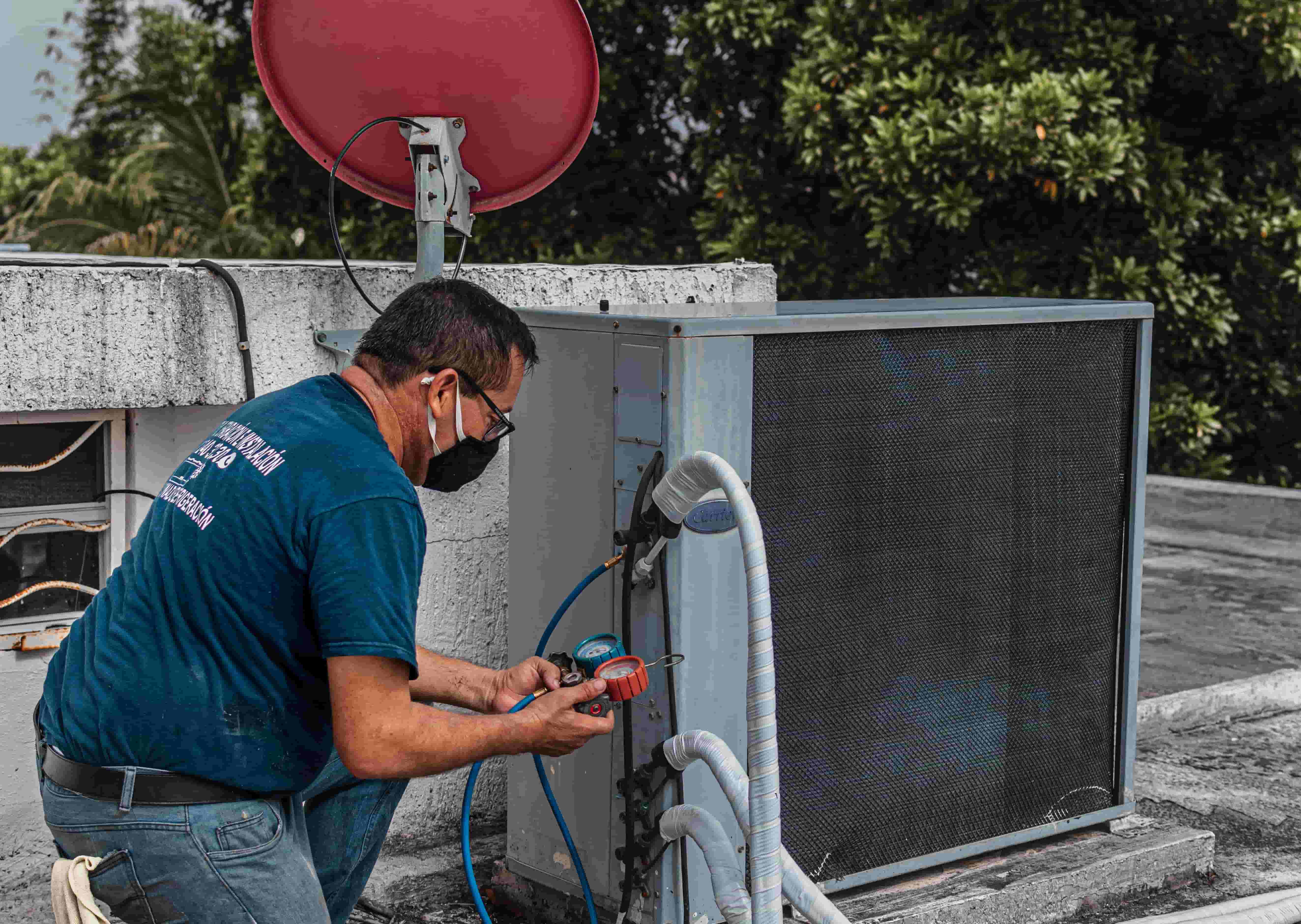
HVAC Contractor Insurance: Cost & PA Requirements
9 min read

Business
Sole Proprietor Business Insurance Guide 2026
10 min read