
Loading
Preparing your coverage insights...
Our Locations
Loading
Preparing your coverage insights...
Homeowners insurance protects your largest investment. Learn what an HO-3 policy covers, what it does not, how much it costs in the states we serve, and how to avoid being underinsured.
Get a home insurance quote. One call compares the carriers we write side by side.
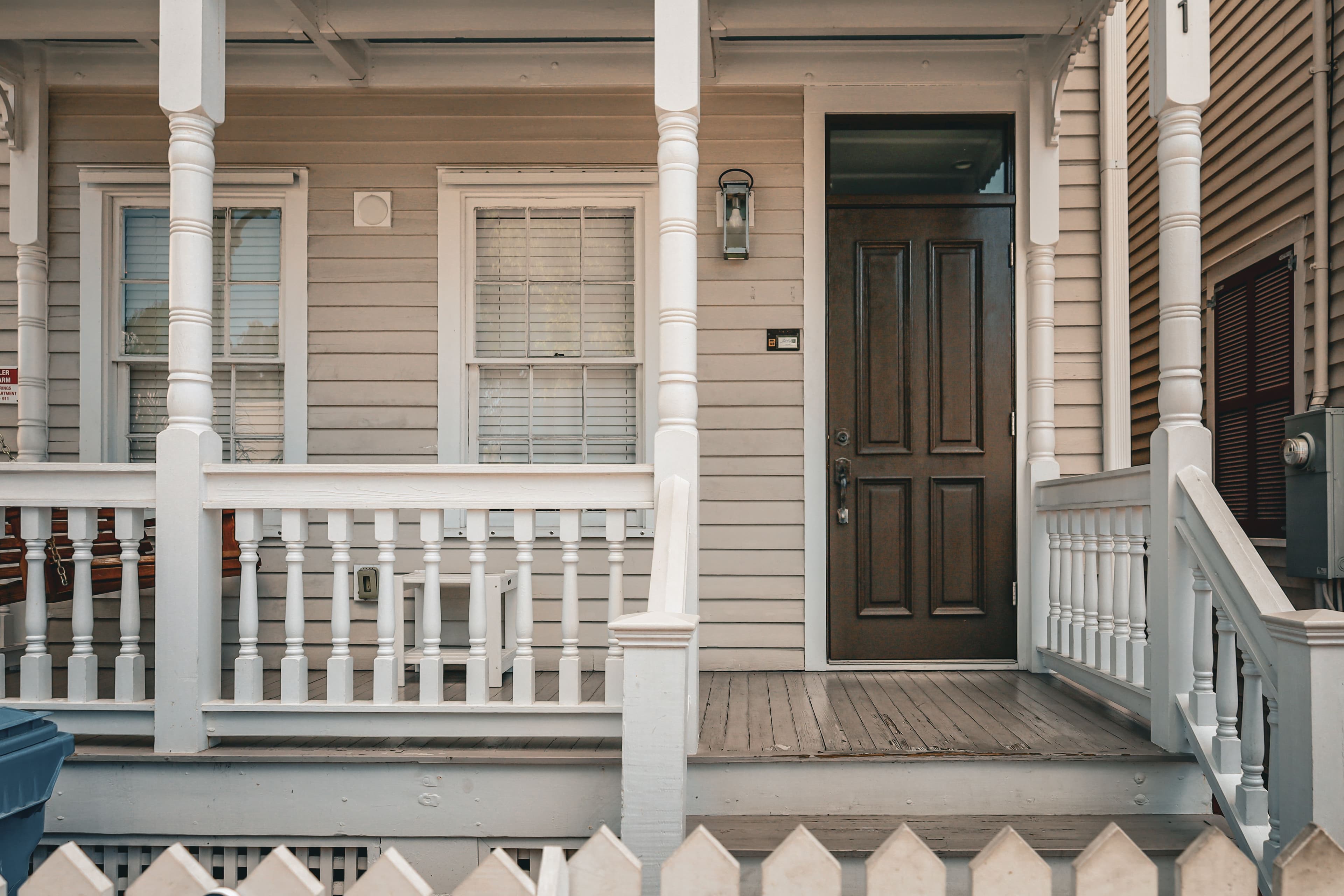
An estimated two out of every three U.S. homes are currently underinsured, according to the American Property Casualty Insurance Association (APCIA) not because owners skipped coverage, but because their dwelling limits were set years ago and never updated for today's construction costs. Materials and labor have risen sharply since 2020. After Colorado's 2021 Marshall Fire, a January 2025 University of Colorado Boulder study found that 74% of policyholders were underinsured, with 36% having less than 75% of actual rebuild coverage. This guide explains what homeowners insurance covers, what it excludes, and how to make sure your policy reflects what it would actually cost to rebuild your home today.
Key takeaways
Two out of three homes are underinsured
Is your dwelling limit still set to what your home cost, not what it would take to rebuild it?
We check your rebuild cost against your current Coverage A limit at no charge, so a fire or storm claim does not leave you covering the rebuild gap yourself.
Homeowners insurance is a package policy that combines property coverage for your home and belongings with personal liability protection in a single contract. It pays to repair or rebuild your home after a covered loss, replace your personal property if it is stolen or destroyed, cover your living expenses if your home becomes uninhabitable, and defend you legally if someone is injured on your property and sues. Most mortgage lenders require it as a loan condition; even homeowners without a mortgage face catastrophic financial risk without it.
Key characteristics of homeowners insurance: it is a package policy covering multiple risks in one contract; it is property-specific (tied to your address); it requires an annual premium; and the dwelling coverage amount should reflect rebuild cost, not market value or purchase price.
Dragon Insurance Services is an independent agency serving homeowners in Camp Hill, PA and across Pennsylvania, Texas, Virginia, Maryland, Ohio, Tennessee, and Kentucky. We shop multiple top-rated carriers, including Safeco, Liberty Mutual, Foremost, and Openly, so you get real options tailored to your home, not a generic quote from a single company. Explore our home insurance coverage options or read on for the complete guide.
Every standard homeowners policy includes six core coverage components. Understanding each one prevents the gaps most homeowners only discover at claim time.
Coverage A Dwelling
Pays to repair or rebuild the physical structure of your home including the roof, walls, floors, foundation, attached garage, and built-in appliances after a covered loss. This limit should reflect the cost to rebuild at today's construction prices, not the market value or purchase price. With labor and materials rising significantly since 2020, many policies written in 2019–2021 are now significantly underinsured. Ask your agent for a replacement cost estimator update every 2–3 years.
Coverage B Other Structures
Covers detached structures on your property: a detached garage, shed, fence, gazebo, or driveway. The standard limit is 10% of your dwelling limit on a $300,000 Coverage A, that is $30,000. If you have a large detached workshop or expensive fencing, confirm that 10% is adequate.
Coverage C Personal Property
Replaces your furniture, electronics, clothing, kitchen appliances, and personal belongings after theft, fire, vandalism, or other covered events. Standard limits run 50–70% of your dwelling limit on a $300,000 home, that is $150,000–$210,000. Important: standard policies cap coverage on specific high-value categories. Jewelry is often limited to $1,000–$2,500; firearms to $2,500; fine art and silverware to similar sublimits. Valuable items above those limits need a scheduled endorsement.
Coverage D Loss of Use (Additional Living Expenses)
Pays for hotel stays, restaurant meals, pet boarding, laundry, and other extra costs while your home is being repaired after a covered loss. Standard limits are 20–30% of your dwelling limit. With hotel rates and restaurant prices elevated nationally, confirm this limit is enough to cover actual temporary housing costs in your area for 3–6 months the typical timeframe for major repair work.
Coverage E Personal Liability
Protects you if someone is injured on your property and files a lawsuit covering legal defense costs and any judgment up to your policy limit. Standard limits are $100,000–$300,000. For most homeowners with meaningful assets home equity, retirement savings, a second vehicle this is not enough. A slip-and-fall injury, dog bite, or swimming pool accident can generate claims well above $300,000. Pairing your homeowners policy with a personal umbrella policy adds $1M–$5M for typically $300–$600/year.
Coverage F Medical Payments to Others
Pays the minor medical bills of guests injured on your property regardless of fault and without requiring a lawsuit. Standard limits are $1,000–$5,000. This is a goodwill payment: it lets you handle a neighbor's sprained ankle or a child's cut from your fence without litigation.
Not all homeowners policies are the same. The ISO policy form number defines how broadly your home and belongings are covered. Most homeowners buy an HO-3 without realizing there are seven other forms and that choosing the wrong one can leave significant gaps.
| Policy | Coverage Basis | Who It Is For | Still Widely Available? |
|---|---|---|---|
| HO-1 Basic | Named perils only (10 perils) | No longer recommended extremely limited | No banned in most states |
| HO-2 Broad | Named perils (16 perils) | Budget buyers; limited coverage | Yes, though rarely sold |
| HO-3 Special ★ Most Common | Open perils on dwelling; named perils on contents | Single-family homeowners 78% of all policies sold | Yes the standard |
| HO-4 Renters | Named perils on contents only | Renters no dwelling coverage. See our renters insurance guide | Yes |
| HO-5 Comprehensive | Open perils on dwelling AND contents; RC on both | Premium homeowners wanting broadest coverage; higher-value homes | Yes select carriers |
| HO-6 Condo | Named perils on interior unit | Condo owners covers interior walls-in and personal property, sized to fit your association's HOA master policy | Yes |
| HO-7 Mobile/Manufactured | Open perils when stationary | HUD-code manufactured and mobile homes see our manufactured home guide | Yes |
| HO-8 Older/Historic Homes | Named perils; ACV settlement | Registered landmarks, historic homes where rebuild cost exceeds market value | Yes specialty carriers |
HO-3 vs. HO-5: the key difference
Both the HO-3 and HO-5 cover your dwelling on an open-perils basis. The difference is how your personal property is handled. An HO-3 covers personal property only for named perils (16 specific events listed in the policy) and typically pays actual cash value. An HO-5 covers personal property on an open-perils basis everything is covered unless specifically excluded and pays replacement cost. If your couch bought for $2,000 five years ago is destroyed, an HO-3 might pay $800 (ACV); an HO-5 pays what a comparable new couch costs today. HO-5 coverage typically runs 10–20% more in annual premium than an HO-3, according to insurance.com research.
Texas uses its own state-specific forms (HO-A, HO-B, HO-C) regulated by the Texas Department of Insurance. If you own property in Texas, ask Dragon Insurance about the correct Texas form for your home.
Standard HO-3 policies cover your dwelling against all perils except those specifically excluded. Personal property is covered only for the named perils listed in your policy. Knowing the exclusions before a loss not after is the difference between a paid claim and a denied one.
Typically covered
Not covered requires separate policies or endorsements
Pennsylvania-specific risks: flood and mine subsidence
Pennsylvania has recurring flooding along the Susquehanna, Schuylkill, and Delaware rivers and coal deposits beneath 43 of the state's 67 counties. Mine subsidence can cause sudden ground collapse and structural damage not covered by a standard HO-3. Homeowners in affected regions should ask about a mine subsidence endorsement through the Pennsylvania Insurance Department.
This is the single most consequential decision in your policy and the one most homeowners overlook until they file a claim. Here is a real-world example of what the choice means in dollars for a PA homeowner with a 12-year-old roof damaged by hail:
| Scenario | Replacement Cost (RC) | Actual Cash Value (ACV) |
|---|---|---|
| Your roof: 12 years old, hail damage | Full rebuild covered | Depreciated payout only |
| Cost to replace roof today | $22,000 | $22,000 |
| Depreciation deduction (12 yrs) | $0 | − $12,000 (approx. 55%) |
| Deductible ($1,000) | − $1,000 | − $1,000 |
| You receive from insurer | $21,000 | $9,000 |
| Gap you pay out of pocket | $0 | $12,000 |
Replacement cost coverage typically costs 10–15% more in annual premium. On a $1,500/year policy, that is roughly $150–$225 extra per year a straightforward trade-off to avoid a five-figure out-of-pocket surprise at claim time. Most mortgage lenders require replacement cost coverage. If you are currently on ACV, ask us about switching.
A separate but related risk is dwelling underinsurance when your Coverage A limit is lower than the actual cost to rebuild your home. According to a January 2025 study from the University of Colorado Boulder, 74% of Marshall Fire policyholders were underinsured at claim time. With construction costs rising significantly since 2020, a home insured for $300,000 three years ago may now need $350,000–$380,000 to rebuild. We conduct free annual coverage reviews specifically to catch this gap before a claim.
Pennsylvania homeowners average $1,278/year for a standard HO-3 policy with $300,000 in dwelling coverage, well below the national average of $2,424/year, according to Bankrate's 2026 rate data. Rates vary significantly by state, driven by local weather risks, construction costs, and claims history. The table below shows estimated annual ranges across the states Dragon Insurance serves.
| State | Est. Annual Range | Key Rate Driver |
|---|---|---|
| Pennsylvania | $1,278–$1,886/yr | Moderate weather; older housing stock in Philadelphia pushes urban rates higher |
| Texas | $2,000–$4,500+/yr | Hail, tornadoes, hurricanes among the highest-risk states nationally; Gulf Coast homes highest |
| Virginia | $1,100–$1,700/yr | Coastal areas carry higher rates; inland Virginia is more affordable |
| Maryland | $1,000–$1,500/yr | Chesapeake Bay proximity raises flood exposure; inland rates lower |
| Ohio | $900–$1,300/yr | Generally lower than coastal or tornado-belt states |
| Tennessee | $1,300–$2,000/yr | Tornado and severe thunderstorm activity pushes rates above the national median |
| Kentucky | $1,200–$1,900/yr | Wind and tornado exposure, river corridor flooding |
Rate ranges reflect market data for a typical single-family home with $300,000 in dwelling coverage and a $1,000 deductible. Individual premiums vary based on home age, construction, location, coverage limits, deductible, claims history, and carrier. Sources: Bankrate, Moneygeek, ValuePenguin (2026).
Carriers use dozens of rating variables, but these 10 carry the most weight in most states. Understanding them helps you identify where savings are possible and what to disclose accurately to avoid claim disputes.
Factors that raise your rate
Factors that lower your rate
Roof over 15 years old?
An aging roof is the single biggest reason carriers raise rates or decline renewal.
We shop carriers who still write policies on older roofs and carriers who reward a recent replacement, so you keep coverage options instead of losing them at renewal.
The most common coverage mistake homeowners make is setting their dwelling limit to the home's market value or purchase price neither of which has any relationship to rebuild cost. The land your home sits on is not destroyed in a fire; the structure is. Rebuild cost is driven by construction labor rates, material costs, and square footage not by what a buyer would pay for the whole property.
A simple way to estimate your rebuild cost
Multiply your home's finished square footage by the local cost-per-square-foot to rebuild. In central Pennsylvania, residential construction costs run roughly $150–$225 per square foot for standard construction, higher for custom homes. A 2,000 sq ft home at $175/sq ft has a rebuild cost of approximately $350,000 even if Zillow shows the market value at $280,000. Your Coverage A limit should match the rebuild cost, not the market value. Ask Dragon Insurance for a formal replacement cost estimator when we run your quote.
Also consider adding an inflation guard endorsement it automatically increases your dwelling limit each year in line with construction cost inflation, eliminating the need to manually update your policy. With materials and labor costs still volatile, this endorsement typically costs $30–$75/year and prevents the underinsurance gap from growing quietly over time. Extended replacement cost coverage (which pays 20–50% above your policy limit if rebuild costs exceed your dwelling limit) is another strong safeguard for older neighborhoods where accurate rebuild cost estimation is difficult.
The most effective premium reductions come from structural improvements and carrier shopping not from cutting coverage. Here are the discounts most homeowners can realistically access, with verified percentage ranges:
Bundle home and auto save 15–25%
Bundling with the same carrier is consistently the largest single discount available, according to insurance.com research. The Hartford offers up to 20% on the home policy and 12% on auto when bundled. As an independent agency, Dragon Insurance can bundle both policies with the same carrier or optimize them separately if that saves more overall.
New roof save 5–35% depending on material
A roof replaced within the last 5 years especially with impact-resistant shingles (Class 4) can reduce premiums by 5–35% and is one of the best investments for both insurance savings and home value. Hail-rated or metal roofing commands the highest discounts in PA, TX, and TN where hail exposure is elevated.
Monitored security and fire alarm system save 2–15%
A professionally monitored burglar and fire alarm system that alerts local authorities typically earns a 2–15% discount. Smoke detectors alone (non-monitored) earn a smaller credit; full ADT or similar monitoring earns the larger portion. Smart home water leak detectors are an emerging discount category with several carriers.
Higher deductible save 10–20%
Raising your deductible from $1,000 to $2,500 typically reduces premium by 10–20%, with Bankrate estimating average annual savings of $408. This strategy works best if you maintain an emergency fund that can cover the higher out-of-pocket in the event of a claim. Do not raise your deductible if a $2,500 surprise would create financial hardship.
Shop carriers at every renewal save 15–40%+
Loyalty discounts with a single carrier rarely outweigh the savings from re-shopping your policy annually. As an independent agency, we compare rates across carriers at every renewal carriers re-price risk each year, and the best rate from 2023 may not be the best rate in 2026.
Standard HO-3 policies leave several predictable gaps that are relatively inexpensive to close. These are the endorsements worth discussing with your agent before you need them:
Water backup and sewer coverage (~$50–$150/year)
Standard policies exclude water that backs up through sewers or drains a surprisingly common and costly claim in older homes and areas with aging municipal sewer systems. This endorsement provides $5,000–$25,000 in coverage and is one of the highest-value, lowest-cost add-ons available.
Extended or guaranteed replacement cost
If rebuild costs exceed your dwelling limit a real risk after major disasters and in a high-inflation construction environment this endorsement covers the overage up to a fixed percentage (extended RC, typically 20–50% above your limit) or without a cap (guaranteed RC). Essential for homeowners in older neighborhoods where rebuild cost is hard to estimate precisely.
Scheduled personal property
Standard policies limit coverage on jewelry ($1,000–$2,500), firearms, silverware, and fine art. If you own high-value items above those sublimits, a scheduled endorsement covers them at their appraised value with no deductible in many cases and broader perils than the base policy.
Home business endorsement
Running a business from home even part-time can void your standard HO-3 coverage for business equipment and business liability. A home business endorsement extends both. For more substantial business operations, a Business Owner's Policy (BOP) is the more comprehensive solution.
Pennsylvania homeowners face a set of state-specific considerations that residents of other states do not.
Most standard homeowners policies include $100,000–$300,000 in personal liability. For many households, that is not adequate. A serious slip-and-fall injury, dog bite lawsuit, or swimming pool accident can easily generate claims of $300,000–$1M especially when medical bills, lost wages, and attorney fees accumulate over time.
Insurance professionals consistently recommend pairing homeowners liability with a personal umbrella policy, which adds $1M–$5M in coverage on top of both your home and auto policy typically for $300–$600/year. If you rent out any portion of your home, see our guide on landlord insurance, which provides the correct liability coverage for rental exposures.
As an independent agency, we compare multiple top-rated carriers in a single conversation different coverage levels, deductibles, and carriers with different claims reputations. We explain the trade-offs so you make an informed decision rather than just picking the cheapest number.
We also conduct free annual reviews to make sure your dwelling coverage keeps pace with rising construction costs one of the most overlooked problems in homeowners insurance today. Explore our carrier partners to see who we work with.
A note for first-generation Nepali and Bhutanese homebuyers
Buying a home in the United States is one of the most significant financial milestones for immigrant families and homeowners insurance is often the last step before closing, explained quickly and under pressure. In Nepal and Bhutan, formal property insurance is far less common; the U.S. system of required coverage, multiple carriers, and competing policy forms can feel overwhelming on a closing timeline.
At Dragon Insurance, we serve a large portion of Nepali and Bhutanese homebuyers across Pennsylvania, Virginia, Maryland, and Ohio. We explain every coverage in plain terms in English, Nepali, or Hindi and help new homeowners understand what their mortgage lender actually requires versus what is optional. We also help families navigate thin U.S. credit history and ITIN-based applications to find carriers with flexible underwriting. If you are buying your first home, call us before you close we will make sure the coverage requirement does not become a last-minute stressor.
What does homeowners insurance cover?
A standard HO-3 homeowners policy covers six areas: your home's dwelling structure against all perils except those specifically excluded, other structures on your property (detached garage, fences, sheds), personal property against named perils, loss of use (hotel and living expenses if your home is uninhabitable), personal liability if someone is injured on your property, and medical payments to guests. Flood and earthquake are the most significant exclusions.
How much homeowners insurance do I need?
Your dwelling limit should match the cost to rebuild your home not its market value or purchase price. In Pennsylvania, residential construction runs roughly $150–$225 per square foot for standard construction. A 2,000 sq ft home would need $300,000–$450,000 in Coverage A. Personal property should be set at 50–70% of your dwelling limit, and personal liability should be at least $300,000 ideally supplemented with a personal umbrella policy.
Is homeowners insurance required by law in Pennsylvania?
Pennsylvania state law does not require homeowners insurance. However, virtually every mortgage lender requires it as a loan condition and it remains required until the mortgage is paid off. Even homeowners without a mortgage face significant financial risk without coverage. The average fire and lightning claim is $88,170, according to the Insurance Information Institute a loss few families can absorb out of pocket.
What is not covered by homeowners insurance?
Standard HO-3 policies exclude flood damage, earthquake, normal wear and tear, intentional damage, business activity losses, nuclear hazard, government action, and typically sewer backup. Many policies also sublimit jewelry, high-value collectibles, and home-based business equipment. In Pennsylvania, mine subsidence is an additional exclusion for homes in coal-country counties. Each gap can be addressed with endorsements or separate policies.
Does homeowners insurance cover flooding?
No. Flood damage is specifically excluded from all standard homeowners policies, including HO-3. A separate flood insurance policy through FEMA's National Flood Insurance Program (NFIP) or a private flood insurer is required. This is especially critical for homeowners near Pennsylvania's Susquehanna, Schuylkill, and Delaware rivers, or in FEMA-designated Special Flood Hazard Areas where federal mortgage rules require separate flood coverage.
What is the difference between replacement cost and actual cash value?
Replacement cost pays the full cost to rebuild or replace your property at today's prices with no depreciation deduction. Actual cash value pays the depreciated market value at the time of the loss. On a 12-year-old roof costing $22,000 to replace, ACV might pay only $9,000–$10,000 after depreciation leaving a $12,000+ gap you cover out of pocket. Replacement cost coverage costs 10–15% more annually but eliminates that exposure.
How can I lower my homeowners insurance premium?
The most effective strategies are: bundle home and auto with the same carrier (save 15–25%), replace an aging roof (save 5–35%), install a monitored security system (save 2–15%), raise your deductible from $1,000 to $2,500 (save 10–20%, avg. $408/yr per Bankrate), and shop competing carriers through an independent agent at every renewal. Stacking multiple discounts can save 30–40% depending on your carrier.
Does homeowners insurance cover mold?
It depends on the cause. If mold results from a sudden, covered water event a burst pipe or appliance overflow the resulting mold remediation is generally covered. If mold results from long-term moisture, a slow leak, or inadequate maintenance, most policies exclude the claim. Mold remediation costs average $1,500–$9,000 and can exceed $30,000 for large infestations.
Can I get homeowners insurance as a new U.S. resident or with a thin credit history?
Yes. Most carriers will issue a homeowners policy even if your U.S. credit history is limited some carriers weight credit less heavily than others. An independent agency like Dragon Insurance can steer you toward carriers with more flexible underwriting. You will need a valid SSN or ITIN, and your mortgage lender will require proof of insurance before closing. Having no prior U.S. homeowners claims history is generally viewed favorably by underwriters.
What happens to my homeowners insurance if I rent out part of my home?
Renting out any part of your home including a single room through a short-term rental platform can void portions of your standard HO-3 policy. Most policies exclude claims arising from tenant occupancy or short-term rental activity. Notify your carrier immediately if you begin renting, and ask about a rental dwelling endorsement or a separate landlord insurance policy.
Does a pool increase homeowners insurance?
Yes. A swimming pool typically raises homeowners insurance premiums by $50 to $100 per year for the added liability exposure. Insurers treat pools as an "attractive nuisance" a feature that draws children and guests who may be injured even if they are trespassing. Pool liability is covered under your personal liability section, but the higher risk usually triggers a premium increase and may require that you maintain a perimeter fence, a self-closing gate, and a safety cover as coverage conditions. Standard homeowners liability limits of $100,000 to $300,000 are often inadequate for a serious drowning or injury claim. Dragon Insurance recommends raising your liability limit to $500,000 or adding a personal umbrella policy if you own a pool.
What is the average cost of homeowners insurance in 2026?
The national average homeowners insurance cost is approximately $2,424 per year ($202/month) for $300,000 in dwelling coverage, according to Bankrate 2026 data. Rates vary significantly by state and risk profile. Pennsylvania averages around $1,278 per year ($107/month) per Bankrate 2026 data, well below the national average due to the state's lower catastrophe exposure compared to coastal or severe-weather states. Texas averages $3,500 to $4,500 per year, driven by hail, wind, and hurricane risk, per Bankrate and MoneyGeek 2026 data. Your actual rate depends on your home's rebuild cost, roof age, location, claims history, credit score (in most states), and which carrier you choose. Dragon Insurance compares Safeco, Openly, Foremost, Liberty Mutual, and others to find the best rate for your specific home across PA, TX, VA, MD, OH, TN, and KY.
Whether you are buying your first home, moving between states, or shopping at renewal, getting quotes across multiple carriers takes less than 10 minutes with us.
Visit us: 1525 Cedar Cliff Dr STE 202, Camp Hill, PA 17011
Serving homeowners across Pennsylvania, Texas, Virginia, Maryland, Ohio, Tennessee, and Kentucky.
Last updated: May 2026. Dragon Insurance Services LLC is a licensed independent insurance agency. Homeowners insurance is not mandated by Pennsylvania state law but is typically required by mortgage lenders. Coverage availability, terms, and rates vary by carrier, state, property type, and individual circumstances. Rate ranges shown are general market estimates and do not constitute a quote or guarantee of specific pricing. Contact us for a personalized quote based on your property. Sources: Insurance Information Institute (iii.org), Bankrate, University of Colorado Boulder, Pennsylvania Insurance Department, NAIC, ValuePenguin, Insurance.com.
Explore Related Coverage
Ready to compare carriers and get a quote?
Dragon Insurance is an independent agency in Camp Hill, PA. We shop 30+ carriers to find your best rate.
Prefer to talk it through?
Get a real quote from a licensed advisor. English, Nepali, and Hindi spoken.
About the Author
Bimal GurungCEO, Agency Principal & Licensed Insurance Agent
Bimal Gurung is CEO and Agency Principal of Dragon Insurance Services, an independent agency in Camp Hill, PA that compares 30+ carriers for clients across Pennsylvania, Texas, Virginia, Maryland, Ohio, Tennessee, and Kentucky.
Meet the Dragon Insurance teamContinue Reading
Home
Condo Insurance (HO-6) Guide
7 min read
Home
Landlord Insurance for Rental Property Owners
8 min read
Home
Why Home Insurance Rates Are Rising in 2026
10 min read
Home
Manufactured Home Insurance - Over 35% Go Uninsured
11 min read
Home
HOA & Condo Association Master Policy Guide 2026
9 min read
Home
Openly Home Insurance Review for Homeowners and Landlords
10 min read